
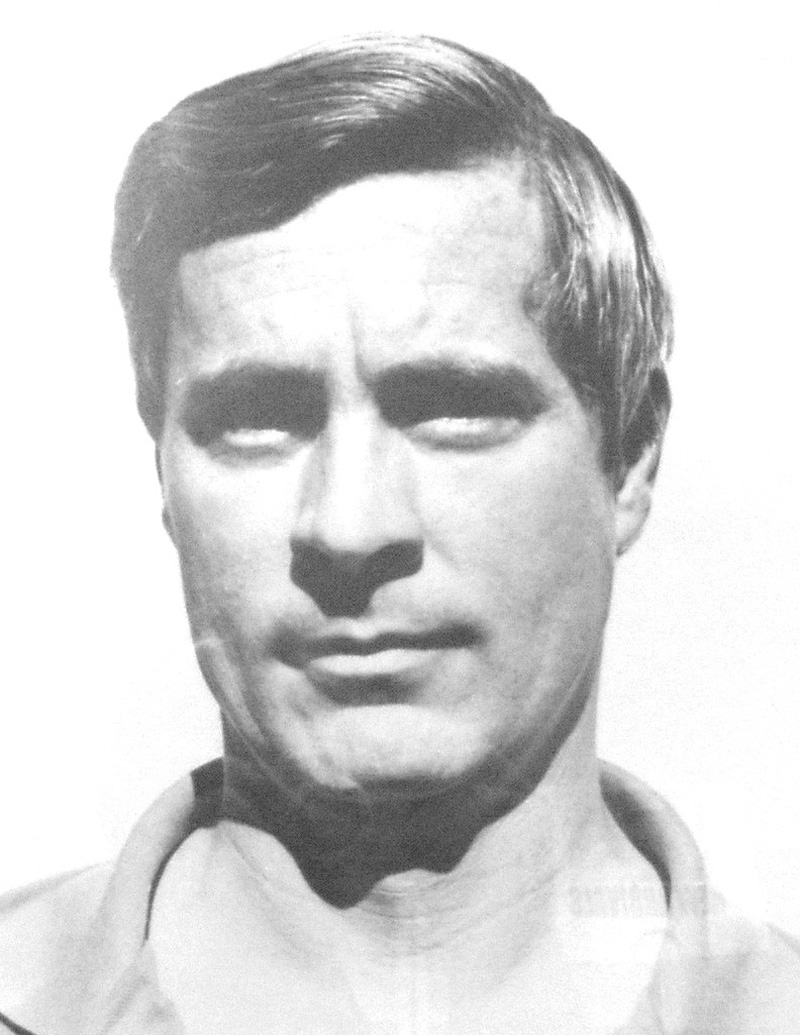
Peter Griffin
Childhood
Born in New Jersey, Peter Griffin grew up in Williamsport, Pennsylvania, Chicago, and Portland, Oregon. His grandfather, Frank Loxley Griffin, was a mathematician at Reed College and authored several mathematics textbooks, which may have influenced Peter’s analytical mind. His father worked as an actuary before leading a labor/management consulting firm in Chicago.
Career
Griffin earned a master’s degree from the University of California at Davis and became a professor at California State University-Sacramento in 1965. He taught statistics, calculus, and differential equations until he died in 1998. Despite his gambling expertise, teaching remained his primary passion.
Blackjack & Gambling Contributions
Griffin’s first encounter with blackjack came in 1970 when he proposed a course on the mathematics of gambling. After initial losses in Nevada casinos, he studied the game mathematically.
His research led to groundbreaking insights, including:
Calculating the average player’s disadvantage at 2% in blackjack.
Developing statistical comparisons between Atlantic City and Las Vegas blackjack players.
Writing The Theory of Blackjack (1979), a seminal work that remains a cornerstone of blackjack strategy.
One of his most notable contributions was identifying hidden advantages in fundamental strategy deviations, which some players exploited to win hundreds of thousands of dollars.
Revenue
While Griffin himself was primarily an academic, his work indirectly generated millions for professional gamblers who applied his strategies. His books continue to sell, contributing to the blackjack advantage-play community.
Interesting facts
- Griffin and Anthony Curtis (publisher of Las Vegas Advisor) coined the term "Couponomy"—extracting value via casino coupons.
- Despite his expertise, Griffin was not a full-time gambler; he preferred teaching.
-
He was inducted into the Blackjack Hall of Fame posthumously.
Legacy
Peter Griffin’s mathematical approach to blackjack set the foundation for modern card counting and advantage play. His books remain essential for serious players, and his research continues to influence gambling strategy today.
Frequently asked questions
No, Griffin was primarily a mathematics professor who studied blackjack as an academic pursuit. However, his research helped professional players gain an edge.
His book The Theory of Blackjack provided mathematical proof of card counting effectiveness and optimal playing strategies.
While he profited from his books, he was not a high-stakes gambler. His income came from teaching and writing.
Griffin passed away from prostate cancer on October 18, 1998, at age 61.
It remains a must-read for serious blackjack players and mathematicians studying gambling theory.

To leave a comment, you must log in: